
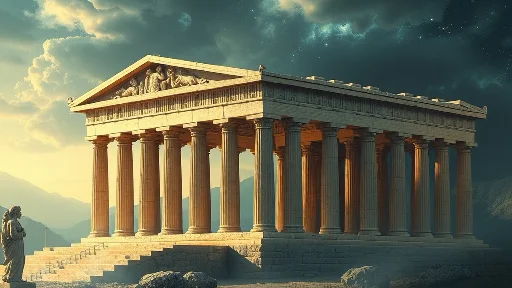
Ancient Greece produced the Western world’s most sophisticated dream theories, ranging from divine revelation to proto-scientific analysis. Homer’s distinction between true dreams (entering through the Gate of Horn) and false dreams (through the Gate of Ivory) established a framework that persisted for centuries: not all dreams are equal, and discerning meaningful from meaningless dreams requires skill.
Aristotle’s treatises On Dreams and On Prophesying by Dreams offered remarkably empirical analyses. He argued that dreams are not divine but arise from the dreamer’s own sensory and emotional residue. Hippocratic physicians read dreams as diagnostic indicators: water dreams suggesting kidney disease, flying indicating blood lightness, and falling reflecting humoral imbalance.
The Asclepion healing temples combined religion and medicine through dream incubation. Patients seeking healing from the god Asclepius slept in the temple after ritual preparation. Their dreams were interpreted by priest-physicians who prescribed treatments based on dream content. Over 300 Asclepia operated across the Greek world.
Artemidorus of Daldis compiled the Oneirocritica in the 2nd century CE - a five-volume masterwork distinguishing literal dreams from symbolic ones and providing interpretive principles that influenced dream analysis for over a millennium. His insistence on considering the dreamer’s personal context was remarkably modern.
The Greek legacy shaped all subsequent Western dream interpretation. The tension between divine and naturalistic explanations, the distinction between significant and trivial dreams, the use of dreams in healing - all these themes continue to animate contemporary dream science. Greece gave the West its foundational vocabulary for thinking about dreams.