
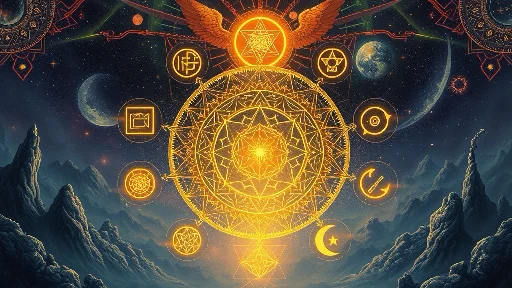
Dream symbolism is among the oldest fields of human inquiry, spanning from Mesopotamian dream tablets dating to 3000 BCE through the Egyptian Chester Beatty Dream Book to the Greek Oneirocritica of Artemidorus. Every culture developed its own symbolic language for dreams, yet remarkable similarities appear across traditions separated by oceans and millennia.
Carl Jung distinguished between personal symbols arising from individual experience and archetypal symbols that appear universally across all cultures. The Shadow, the Wise Old Man, the Great Mother, the Hero - these figures surface in dreams from Tokyo to Oslo in strikingly similar forms, suggesting a shared unconscious substrate encoded in human psychology itself.
Water is perhaps the most universal dream symbol, representing the unconscious mind across virtually every tradition. Calm water suggests emotional serenity, turbulent seas evoke inner turmoil, and crossing water marks a psychological threshold or life transition. The depth of the water often corresponds to how deeply unconscious the associated feelings are.
Houses in dreams consistently symbolize the psyche itself. Basements represent the unconscious, attics symbolize higher aspirations or hidden potential, bedrooms connect to intimacy, and kitchens to nourishment. Discovering unknown rooms in a familiar house signals the emergence of previously unknown aspects of the self.
The true art of interpretation lies in asking what each symbol means to you personally, in the context of this specific dream and life moment. Universal dictionaries are useful starting points, but your own emotional response and personal associations are always the most reliable guide to meaning.