
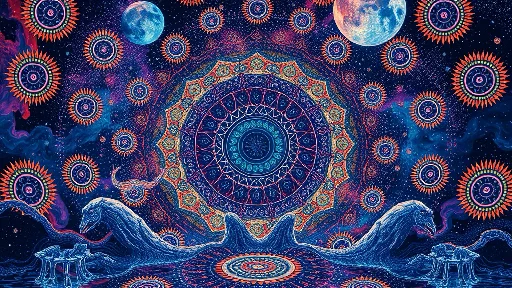
Hypnagogic hallucinations are vivid sensory experiences that occur at the threshold between waking and sleep. Named from the Greek hypnos (sleep) and agogos (leading into), they can involve visual imagery, auditory sounds, tactile sensations, or even the feeling of falling. An estimated 70% of people experience them at least occasionally.
The imagery is characteristically fluid and transformative - faces morphing into landscapes, geometric patterns evolving into scenes, voices emerging from abstract sound. Unlike dreams proper, hypnagogic experiences tend to lack narrative structure. They are raw perceptual material, unfiltered by the story-making functions that organize full dreams during REM sleep.
The hypnagogic state has been one of the most productive creative states in history. Thomas Edison slept holding steel balls to capture hypnagogic imagery. Salvador Dalí used a key and plate for the same purpose. Many scientists, artists, and writers report breakthrough ideas emerging from this liminal state between consciousness and sleep.
Neurologically, the hypnagogic state represents a gradual transition where waking consciousness overlaps with early sleep processes. Alpha waves give way to theta activity while residual awareness remains. This hybrid state allows the mind to perceive its own spontaneous imagery with enough waking awareness to remember and reflect on it.
Practicing deliberate hypnagogic observation - lying still, allowing the mind to drift toward sleep while maintaining a thread of awareness - is a foundational skill for both lucid dreaming (via the WILD technique) and creative ideation. The images that arise are the unconscious mind’s raw vocabulary, unedited by the rational filter.