
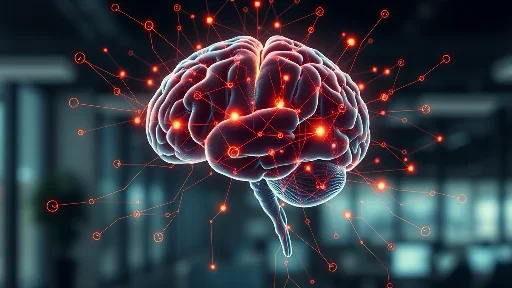
Direct Answer: Prophetic dreaming, the experience of dreaming about future events, has evolved from being viewed as divine messages in ancient Egypt and Greece to being studied as "precognition" and "deja-rêvé" in modern neuroscience. While history focuses on the spiritual oracle, modern science explores how the brain's predictive coding mechanisms might simulate future possibilities during REM sleep.
Since the dawn of human history, the dream has been more than just a nightly hallucination; it has been a window into the future. From the Pharaohs of Egypt to the philosophers of Greece, the "prophetic dream" was the primary way that gods and the universe communicated with the living. But as we moved from the age of faith to the age of reason, our understanding of these visions shifted from the external (gods) to the internal (the brain). Is the prophetic dream a mystical miracle, or is it the ultimate evidence of our brain's extraordinary ability to calculate probability?
Exploring the history of prophetic dreaming is a journey through the evolution of human consciousness itself. It reveals how we have always sought to master the unknown, using the symbols of the night to navigate the challenges of the day. Whether you believe in divine intervention or statistical likelihood, the impact of these dreams on our culture and personal lives is undeniable.
The Four Eras of Prophetic Insight
To understand the prophetic dream, we must examine it through the lenses of history, religion, psychology, and modern science.
The Ancient Perspective: The Oracle and the Temple
In Ancient Egypt and Greece, dreaming was a formal institution. In the temples of Asclepius, seekers would practice "incubation" - sleeping in sacred spaces to receive healing or prophetic dreams. These dreams were seen as objective truths delivered by the gods. The role of the priest (the first dream interpreters) was to translate these divine metaphors into actionable advice for kings and citizens alike.
The Islamic Perspective: The Part of Prophethood
In the Islamic tradition, the prophetic dream occupies a unique and honored place. A famous Hadith states that "True dreams are one of the forty-six parts of Prophethood." Scholars like Ibn Sirin developed sophisticated systems to distinguish between Ru'ya (divine visions) and Hulm (ego-driven dreams). This perspective maintains that while true prophecy ended with the prophets, "glad tidings" through dreams remain a connection between the Creator and the believer.
The Jungian Perspective: Synchronicity and the Acausal
Carl Jung moved the discussion into the realm of the psyche. He introduced the concept of synchronicity - a meaningful coincidence between an internal state (a dream) and an external event (the future). Jung suggested that the collective unconscious exists outside of linear time. Therefore, a dream might not be "predicting" the future so much as "accessing" a layer of reality where past, present, and future are already integrated into a single whole.
The Modern Perspective: Predictive Coding and Probability
Modern neuroscience offers a fascinating secular explanation: Predictive Coding. During REM sleep, the brain is not just resting; it is running simulations. It takes everything you have learned, noticed (even subconsciously), and experienced, and it projects hundreds of "future scenarios" to prepare you for potential outcomes. When one of these scenarios happens to come true, we experience it as a prophetic dream. This is not magic, but the highest form of biological intelligence.
How to Identify a 'True' Prophetic Dream
While most dreams are just "brain-junk" or emotional processing, true prophetic or significant dreams often share these characteristics:
- Vividness and Clarity: They feel more "real" than ordinary dreams and are remembered with crystal clarity for years.
- Emotional Weight: They carry a sense of urgency or awe that lingers long after waking.
- Specific Symbols: They often contain specific, concrete details that later manifest in reality, rather than just vague feelings.
- The 'Deja-Rêvé' Effect: The feeling that you have already lived a moment because you dreamed it previously.
By using dreamOut AI Dream Interpreter to journal your dreams, you can look back and find these "hidden prophecies." Often, we don't realize a dream was prophetic until weeks later. A searchable, categorized digital journal is the best tool for uncovering your brain's predictive powers.
The Future of Dreaming: AI and Beyond
We are now entering a fifth era: the era of AI-assisted dream analysis. By using dreamOut AI Dream Interpreter to cross-reference your dream descriptions against 19 different interpretive traditions, we are combining the ancient wisdom of the oracle with the statistical power of modern technology. We may never be able to "guarantee" a prophecy, but we can certainly become much better at listening to the deep, predictive intelligence of our own minds.
Is every vivid dream prophetic?
No. Most vivid dreams are actually "vivid" because of emotional intensity or REM rebound. A prophetic dream is characterized by its correspondence to a future event that you could not have logically predicted.
Can I learn to have more prophetic dreams?
You can improve your "receptivity" by practicing mindfulness and keeping a detailed dream journal. The more you pay attention to your dreams, the more "space" you give your brain to surface its predictive simulations.
What is the difference between Deja Vu and Deja Rêvé?
Deja Vu is the feeling that you've experienced a current situation before. Deja Rêvé is the specific feeling that you have dreamed the current situation before. It is a subtle but important distinction in dream science.
Does science believe in prophetic dreams?
Mainstream science is skeptical of "mystical" prophecy but is very interested in "precognitive simulations." Most scientists believe these dreams are the result of the brain's massive data-processing and pattern-recognition capabilities.
Ready to Understand Your Subconscious?
dreamOut AI Dream Interpreter analyzes your dreams through 19 different interpretation traditions simultaneously - from Jungian psychology to Islamic wisdom to neuroscience.
Download dreamOut AI Dream Interpreter →