
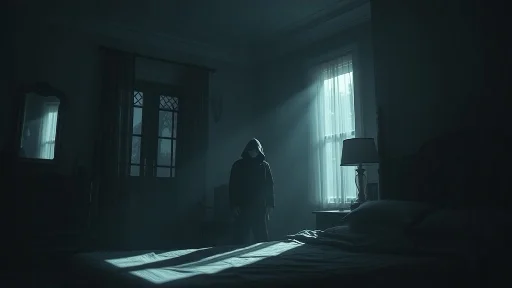
Sleep paralysis occurs when consciousness returns while REM-related muscle atonia remains active - an awake mind in a paralyzed body. It affects 7-8% of the general population and is often accompanied by vivid hallucinations of threatening presences. The experience is universal across cultures: the Old Hag of Newfoundland, Kanashibari in Japan, Jinn visitations in the Middle East.
Neurologically, it results from imperfect transitions between sleep states. Threatening hallucinations arise from amygdala hyperactivation during REM combined with body-schema distortions. The chest pressure may reflect awareness of altered REM breathing, while the presence hallucination is generated by the same circuits that detect other minds.
Risk factors include sleep deprivation, irregular sleep schedules, sleeping supine, high stress, narcolepsy, and PTSD. Substance use including cannabis and certain medications can trigger episodes. Ironically, anxiety about potential episodes can itself trigger them through anticipatory worry.
Despite its terrifying quality, sleep paralysis is medically harmless. Focusing on small movements like wiggling a toe rather than fighting the full-body paralysis reduces both duration and distress. Some lucid dreaming practitioners deliberately cultivate this state as a launch pad for conscious dream entry.
Understanding the neurological basis dramatically reduces distress - the experience becomes strange rather than terrifying. Many cultures developed elaborate mythologies around the visitor in the night, reflecting cultural fears projected onto the sleep paralysis figure. Knowledge transforms this phenomenon from curse to curiosity.