
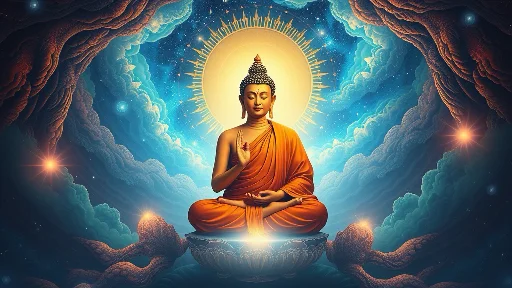
Dream yoga (Milam in Tibetan) is a tantric Buddhist practice dating back to at least the 8th century CE, systematized in the Six Yogas of Naropa. Unlike Western lucid dreaming which primarily emphasizes control and exploration, dream yoga uses dream awareness as a direct path to recognizing the nature of mind and achieving spiritual liberation.
The core teaching is that both waking experience and dream experience are equally illusory - appearances arising in consciousness without inherent solidity. By first recognizing dreams as dreams and then extending that recognition to waking life, the practitioner loosens attachment to appearances and moves toward the recognition of the luminous nature of awareness itself.
The practice involves four progressive stages: first, recognizing the dream state; second, transforming dream content (demonstrating the mind’s creative power over appearances); third, multiplying and reducing dream objects (deepening control); and fourth, dissolving the dream entirely into clear light - the fundamental luminosity of consciousness freed from all projected content.
Daytime preparation is essential in dream yoga. Practitioners cultivate illusory body practice - recognizing throughout the day that waking experience has a dream-like quality. By repeatedly reminding themselves that all appearances are mind, they build the recognition habit that eventually transfers into the dream state.
Dream yoga represents perhaps the most sophisticated integration of dream practice and spiritual development in human history. Where Western lucid dreaming tends toward exploration and therapy, dream yoga points toward the ultimate question: what is the nature of the awareness that is aware? The answer, according to the tradition, is available in the transparency of the dream.
Rüya yogası (Tibet dilinde Milam), Naropa'nın Altı Yogasında sistemleştirilmiş, en azından MS 8. yüzyıla kadar uzanan tantrik bir Budist uygulamasıdır. Öncelikle kontrol ve keşfetmeyi vurgulayan Batı berrak rüyasının aksine, rüya yogası, rüya farkındalığını zihnin doğasını tanımanın ve ruhsal özgürlüğe ulaşmanın doğrudan bir yolu olarak kullanır.
Temel öğreti, hem uyanıklık deneyiminin hem de rüya deneyiminin eşit derecede yanıltıcı olduğu, yani doğası gereği katılık olmaksızın bilinçte ortaya çıkan görünümler olduğudur. Uygulayıcı, önce rüyaları rüya olarak tanıyarak ve sonra bu farkındalığı uyanık yaşama genişleterek, görünüşlere olan bağlılığını gevşetir ve farkındalığın kendisinin parlak doğasının tanınmasına doğru ilerler.
Uygulama dört aşamalı aşamayı içerir: birincisi, rüya durumunu tanımak; ikincisi, rüya içeriğini dönüştürmek (zihnin görünüşler üzerindeki yaratıcı gücünü göstermek); üçüncüsü, rüya nesnelerinin çoğaltılması ve azaltılması (kontrolün derinleştirilmesi); ve dördüncüsü, rüyayı tamamen berrak ışığa dönüştürmek - yansıtılan tüm içerikten arınmış bilincin temel parlaklığı.
Rüya yogasında gündüz hazırlığı çok önemlidir. Uygulayıcılar, gün boyunca uyanıklık deneyiminin rüya benzeri bir kaliteye sahip olduğunun farkına vararak yanıltıcı vücut uygulamaları geliştirirler. Kendilerine tüm görünüşlerin zihinden ibaret olduğunu tekrar tekrar hatırlatarak, sonunda rüya haline dönüşecek olan tanıma alışkanlığını geliştirirler.
Rüya yogası belki de insanlık tarihinde rüya pratiği ile manevi gelişimin en sofistike entegrasyonunu temsil eder. Batılı bilinçli rüyanın keşfetme ve terapiye yöneldiği yerde, rüya yogası nihai soruyu işaret ediyor: Farkında olan farkındalığın doğası nedir? Geleneğe göre cevap rüyanın şeffaflığında mevcuttur.
El yoga de los sueños (Milam en tibetano) es una práctica budista tántrica que se remonta al menos al siglo VIII d.C., sistematizada en los Seis Yogas de Naropa. A diferencia de los sueños lúcidos occidentales, que enfatizan principalmente el control y la exploración, el yoga de los sueños utiliza la conciencia de los sueños como un camino directo para reconocer la naturaleza de la mente y lograr la liberación espiritual.
La enseñanza central es que tanto la experiencia de vigilia como la experiencia de los sueños son igualmente ilusorias: apariencias que surgen en la conciencia sin solidez inherente. Al reconocer primero los sueños como sueños y luego extender ese reconocimiento a la vida de vigilia, el practicante afloja el apego a las apariencias y avanza hacia el reconocimiento de la naturaleza luminosa de la conciencia misma.
La práctica consta de cuatro etapas progresivas: primero, reconocer el estado de sueño; segundo, transformar el contenido de los sueños (demostrando el poder creativo de la mente sobre las apariencias); tercero, multiplicar y reducir los objetos de los sueños (profundizar el control); y cuarto, disolver el sueño por completo en una luz clara: la luminosidad fundamental de la conciencia liberada de todo contenido proyectado.
La preparación diurna es fundamental en el yoga de los sueños. Los practicantes cultivan la práctica del cuerpo ilusorio, reconociendo a lo largo del día que la experiencia de vigilia tiene una cualidad similar a la de un sueño. Al recordarse repetidamente que todas las apariencias son mente, desarrollan el hábito de reconocimiento que eventualmente se transfiere al estado de sueño.
El yoga de los sueños representa quizás la integración más sofisticada de la práctica de los sueños y el desarrollo espiritual en la historia de la humanidad. Mientras que los sueños lúcidos occidentales tienden hacia la exploración y la terapia, el yoga de los sueños apunta hacia la pregunta fundamental: ¿cuál es la naturaleza de la conciencia que es consciente? La respuesta, según la tradición, está disponible en la transparencia del sueño.
Le yoga des rêves (Milam en tibétain) est une pratique bouddhiste tantrique remontant au moins au 8ème siècle de notre ère, systématisée dans les Six Yogas de Naropa. Contrairement au rêve lucide occidental qui met principalement l’accent sur le contrôle et l’exploration, le yoga du rêve utilise la conscience du rêve comme chemin direct pour reconnaître la nature de l’esprit et atteindre la libération spirituelle.
L’enseignement central est que l’expérience de veille et l’expérience de rêve sont également illusoires – des apparences surgissant dans la conscience sans solidité inhérente. En reconnaissant d'abord les rêves comme des rêves, puis en étendant cette reconnaissance à la vie éveillée, le praticien relâche l'attachement aux apparences et progresse vers la reconnaissance de la nature lumineuse de la conscience elle-même.
La pratique comporte quatre étapes progressives : premièrement, reconnaître l’état de rêve ; deuxièmement, transformer le contenu du rêve (démontrant le pouvoir créateur de l’esprit sur les apparences) ; troisièmement, multiplier et réduire les objets de rêve (approfondissement du contrôle) ; et quatrièmement, dissoudre entièrement le rêve dans une lumière claire – la luminosité fondamentale de la conscience libérée de tout contenu projeté.
La préparation de jour est essentielle dans le yoga du rêve. Les praticiens cultivent la pratique du corps illusoire – reconnaissant tout au long de la journée que l’expérience de veille a une qualité onirique. En se rappelant à plusieurs reprises que toutes les apparences sont mentales, ils développent l’habitude de reconnaissance qui finit par se transformer en état de rêve.
Le yoga des rêves représente peut-être l’intégration la plus sophistiquée de la pratique du rêve et du développement spirituel dans l’histoire de l’humanité. Là où le rêve lucide occidental tend vers l’exploration et la thérapie, le yoga du rêve pointe vers la question ultime : quelle est la nature de la conscience qui est consciente ? La réponse, selon la tradition, se trouve dans la transparence du rêve.
Traumyoga (Milam auf Tibetisch) ist eine tantrische buddhistische Praxis, die mindestens bis ins 8. Jahrhundert n. Chr. zurückreicht und in den sechs Yogas von Naropa systematisiert ist. Im Gegensatz zum westlichen Klarträumen, bei dem in erster Linie Kontrolle und Erkundung im Vordergrund stehen, nutzt Traumyoga das Traumbewusstsein als direkten Weg, um die Natur des Geistes zu erkennen und spirituelle Befreiung zu erreichen.
Die Kernlehre besteht darin, dass sowohl Wacherfahrung als auch Traumerfahrung gleichermaßen illusorisch sind – Erscheinungen, die im Bewusstsein ohne inhärente Festigkeit entstehen. Indem der Praktiker Träume zunächst als Träume erkennt und diese Erkenntnis dann auf das Wachleben ausdehnt, löst er die Bindung an den Schein und gelangt zur Erkenntnis der leuchtenden Natur des Bewusstseins selbst.
Die Praxis umfasst vier progressive Phasen: erstens das Erkennen des Traumzustands; zweitens die Transformation von Trauminhalten (Demonstration der schöpferischen Macht des Geistes über den Schein); drittens die Vervielfachung und Reduzierung von Traumobjekten (Vertiefung der Kontrolle); und viertens, den Traum vollständig in klares Licht aufzulösen – die grundlegende Leuchtkraft des Bewusstseins, befreit von allen projizierten Inhalten.
Die Vorbereitung am Tag ist beim Traumyoga unerlässlich. Praktizierende kultivieren die Praxis des Scheinkörpers und erkennen im Laufe des Tages, dass das Wacherlebnis eine traumähnliche Qualität hat. Indem sie sich immer wieder daran erinnern, dass alle Erscheinungen Geist sind, entwickeln sie eine Erkennungsgewohnheit, die schließlich in den Traumzustand übergeht.
Traumyoga stellt vielleicht die raffinierteste Integration von Traumpraxis und spiritueller Entwicklung in der Geschichte der Menschheit dar. Während das westliche Klarträumen eher auf Erkundung und Therapie ausgerichtet ist, weist Traum-Yoga auf die ultimative Frage hin: Was ist die Natur des Gewahrseins, das bewusst ist? Die Antwort liegt der Überlieferung nach in der Transparenz des Traums.
Lo yoga del sogno (Milam in tibetano) è una pratica buddista tantrica risalente almeno all'VIII secolo d.C., sistematizzata nei Sei Yoga di Naropa. A differenza del sogno lucido occidentale che enfatizza principalmente il controllo e l’esplorazione, lo yoga del sogno utilizza la consapevolezza del sogno come percorso diretto per riconoscere la natura della mente e raggiungere la liberazione spirituale.
L’insegnamento fondamentale è che sia l’esperienza di veglia che l’esperienza di sogno sono ugualmente illusorie – apparenze che sorgono nella coscienza senza solidità intrinseca. Riconoscendo prima i sogni come sogni e poi estendendo tale riconoscimento alla vita di veglia, il praticante allenta l'attaccamento alle apparenze e si muove verso il riconoscimento della natura luminosa della consapevolezza stessa.
La pratica prevede quattro fasi progressive: prima, il riconoscimento dello stato di sogno; secondo, trasformare il contenuto del sogno (dimostrando il potere creativo della mente sulle apparenze); terzo, moltiplicare e ridurre gli oggetti del sogno (approfondimento del controllo); e quarto, dissolvere interamente il sogno in chiara luce – la luminosità fondamentale della coscienza liberata da ogni contenuto proiettato.
La preparazione diurna è essenziale nello yoga da sogno. I praticanti coltivano la pratica del corpo illusorio, riconoscendo durante il giorno che l’esperienza di veglia ha una qualità simile a un sogno. Ricordando ripetutamente a se stessi che tutte le apparenze sono mente, costruiscono l’abitudine al riconoscimento che alla fine si trasferisce nello stato di sogno.
Dream yoga represents perhaps the most sophisticated integration of dream practice and spiritual development in human history. Laddove il sogno lucido occidentale tende all’esplorazione e alla terapia, lo yoga del sogno punta verso la domanda ultima: qual è la natura della consapevolezza che è consapevole? The answer, according to the tradition, is available in the transparency of the dream.
A ioga dos sonhos (Milam em tibetano) é uma prática budista tântrica que remonta pelo menos ao século VIII dC, sistematizada nos Seis Yogas de Naropa. Ao contrário dos sonhos lúcidos ocidentais, que enfatizam principalmente o controle e a exploração, a ioga dos sonhos usa a consciência dos sonhos como um caminho direto para reconhecer a natureza da mente e alcançar a liberação espiritual.
O ensinamento central é que tanto a experiência de vigília como a experiência de sonho são igualmente ilusórias – aparências que surgem na consciência sem solidez inerente. Ao reconhecer primeiro os sonhos como sonhos e depois estender esse reconhecimento à vida desperta, o praticante afrouxa o apego às aparências e avança em direção ao reconhecimento da natureza luminosa da própria consciência.
A prática envolve quatro etapas progressivas: primeiro, reconhecer o estado de sonho; segundo, transformar o conteúdo dos sonhos (demonstrando o poder criativo da mente sobre as aparências); terceiro, multiplicar e reduzir objetos oníricos (aprofundar o controle); e quarto, dissolver inteiramente o sonho em luz clara – a luminosidade fundamental da consciência livre de todo conteúdo projetado.
A preparação diurna é essencial na ioga dos sonhos. Os praticantes cultivam práticas corporais ilusórias – reconhecendo ao longo do dia que a experiência de vigília tem uma qualidade semelhante à do sonho. Ao lembrarem-se repetidamente de que todas as aparências são mente, eles constroem o hábito de reconhecimento que eventualmente se transfere para o estado de sonho.
A ioga dos sonhos representa talvez a integração mais sofisticada da prática dos sonhos e do desenvolvimento espiritual na história da humanidade. Enquanto os sonhos lúcidos ocidentais tendem para a exploração e a terapia, a ioga dos sonhos aponta para a questão fundamental: qual é a natureza da consciência que está consciente? A resposta, segundo a tradição, está na transparência do sonho.
Йога сновидений (милам по-тибетски) - это тантрическая буддийская практика, восходящая как минимум к 8 веку нашей эры и систематизированная в Шести йогах Наропы. В отличие от западных осознанных сновидений, которые в первую очередь делают упор на контроль и исследование, йога сновидений использует осознание сновидений как прямой путь к познанию природы ума и достижению духовного освобождения.
Основное учение заключается в том, что как опыт бодрствования, так и опыт сна одинаково иллюзорны - видимости, возникающие в сознании без присущей им твердости. Сначала распознавая сны как сны, а затем распространяя это распознавание на жизнь наяву, практикующий ослабляет привязанность к видимости и движется к распознаванию светящейся природы самого осознания.
Практика включает в себя четыре последовательных этапа: во-первых, распознавание состояния сна; во-вторых, трансформация содержания сновидения (демонстрация творческой власти разума над видимостью); в-третьих, умножение и уменьшение объектов сновидения (углубление контроля); и в-четвертых, полное растворение сновидения в ясном свете - фундаментальном свете сознания, свободного от всего проецируемого содержания.
Дневная подготовка важна в йоге сновидений. Практикующие практикуют практику иллюзорного тела, признавая в течение дня, что ощущения бодрствования напоминают сон. Постоянно напоминая себе, что все явления - это разум, они вырабатывают привычку узнавать, которая в конечном итоге переходит в состояние сна.
Йога сновидений представляет собой, пожалуй, самую сложную интеграцию практики сновидений и духовного развития в истории человечества. В то время как западные осознанные сновидения имеют тенденцию к исследованию и терапии, йога сновидений указывает на главный вопрос: какова природа осознания, которое осознает? Ответ, по традиции, кроется в прозрачности сна.
يوجا الأحلام (ميلام باللغة التبتية) هي ممارسة بوذية تانتراية يعود تاريخها إلى القرن الثامن الميلادي على الأقل، وقد تم تنظيمها في يوجا ناروبا الستة. على عكس الحلم الواضح الغربي الذي يركز في المقام الأول على السيطرة والاستكشاف، تستخدم يوجا الأحلام الوعي بالحلم كطريق مباشر للتعرف على طبيعة العقل وتحقيق التحرر الروحي.
جوهر التعاليم هو أن كلا من تجربة اليقظة وتجربة الحلم وهمية على حد سواء - مظاهر تنشأ في الوعي دون صلابة متأصلة. من خلال التعرف على الأحلام أولاً على أنها أحلام ثم توسيع هذا الاعتراف إلى حياة اليقظة، يخفف الممارس الارتباط بالمظاهر ويتحرك نحو التعرف على الطبيعة المضيئة للوعي نفسه.
تتضمن الممارسة أربع مراحل تقدمية: أولاً، التعرف على حالة الحلم؛ ثانيًا، تحويل محتوى الحلم (إظهار قوة العقل الإبداعية على المظاهر)؛ ثالثًا، مضاعفة أشياء الأحلام وتقليلها (تعميق التحكم)؛ ورابعًا، تحويل الحلم بالكامل إلى ضوء واضح – اللمعان الأساسي للوعي المتحرر من كل المحتوى المسقط.
يعد التحضير أثناء النهار أمرًا ضروريًا في يوجا الأحلام. يزرع الممارسون ممارسة جسدية وهمية، مدركين طوال اليوم أن تجربة الاستيقاظ لها جودة تشبه الحلم. ومن خلال تذكير أنفسهم مرارًا وتكرارًا بأن كل المظاهر هي عقل، فإنهم يبنون عادة الإدراك التي تنتقل في النهاية إلى حالة الحلم.
ربما تمثل يوجا الأحلام التكامل الأكثر تطورًا بين ممارسة الأحلام والتطور الروحي في تاريخ البشرية. في حين يميل الحلم الواضح الغربي نحو الاستكشاف والعلاج، تشير يوجا الأحلام إلى السؤال النهائي: ما هي طبيعة الوعي المدرك؟ الجواب حسب التقليد موجود في شفافية الحلم.
梦瑜伽(藏语为Milam)是一种密宗佛教修行,其历史至少可以追溯到公元八世纪,系统化地记载于那洛巴的六瑜伽中。与主要强调控制和探索的西方清醒梦不同,梦瑜伽利用梦觉知觉作为认识心灵本质和实现精神解放的直接途径。
其核心教义是,醒时的经验和梦中的经验都同样是虚幻的 - - 意识中出现的表象,没有内在的坚固性。通过首先认识到梦就是梦,然后将这种认识延伸到清醒的生活中,练习者会放松对表象的执着,并逐渐认识到意识本身的光明本质。
修行分为四个渐进的阶段:第一、认识梦境;第二,改变梦的内容(展示心灵对表象的创造力);三、增减梦境(加深控制);第四,将梦完全溶解在清晰的光中 - - 从所有投射内容中解放出来的意识的基本光明。
白天的准备对于梦想瑜伽至关重要。练习者进行虚幻的身体练习 - - 全天认识到清醒的经历具有梦幻般的品质。通过反复提醒自己一切现象都是心,他们建立了识别习惯,最终转移到梦境中。
梦想瑜伽也许代表了人类历史上梦想实践和精神发展最复杂的结合。西方的清醒梦倾向于探索和治疗,而梦瑜伽则指向终极问题:意识到的意识的本质是什么?根据传统,答案可以在梦的透明性中找到。